What to Expect When Hiring an Interior Designer for Your Home Renovation
A home renovation is not only one of the most significant investments you can make in your property, it can also be one of the most demanding. Done well, it is an opportunity to improve how your home functions, refine the way it feels, and create spaces that better support the way you live every day.
For many homeowners, the process begins with excitement. There may be a clear list of frustrations: a kitchen that no longer works, a bathroom that feels tired, a living space that lacks warmth, or a home that has slowly become disconnected over time, no longer supporting the changes that evolve with time. What often comes next however, is the realisation that a renovation involves hundreds of decisions, many of which are linked.
Internal planning, finishes, lighting, joinery, furniture, colours, materials, budgets, approvals, timelines and trades all need to work together. A decision made in one area can have a flow-on effect elsewhere. Without a clear design direction, it is easy for a renovation to become fragmented or for costs escalating through changes, delays and uncertainty.
This is where an experienced interior designer becomes invaluable.
At Conway + Wise, our role is to bring clarity to the process. Professional renovation design services go far beyond selecting furniture or choosing paint colours. We shape the vision for your home, coordinate the many moving parts of a renovation, and ensure every detail contributes to a cohesive outcome.
We work with clients from the early concept stage through to design development, documentation, sourcing, construction support and final styling. The aim is always to create interiors that are aesthetically refined, highly functional and creatively driven, while making the renovation journey feel more considered and less overwhelming.
Defining the Vision
Many homeowners know what they do not like about their home, but find it harder to articulate exactly what they want instead. They may have saved images, collected ideas, or developed a sense of the mood they are drawn to, but translating that into a cohesive design can be challenging.
An interior designer helps shape these ideas into a clear direction. This begins with understanding how you live. How does your family use the home? Where do you gather? What feels frustrating? What needs to be more practical? What should feel calmer, warmer, lighter or more generous?
From there, a designer can establish the design narrative, or what we often refer to as the project's north star. This becomes the guiding idea that helps every decision feel connected. It informs the material palette, colour direction, spatial planning, joinery, lighting, furniture and styling.
Rather than making isolated choices, the renovation starts to develop a sense of purpose. Each detail has a reason for being there.
Space Planning Comes First
One of the most important parts of home renovation design is internal planning. Before finishes, furniture or styling are considered, we look closely at how the home is arranged: the relationship between rooms, the position of walls and openings, circulation, storage, natural light and the way each space responds to the way you live.
A well-designed home should support everyday life with ease. This means considering room flow, furniture placement, storage, natural light, circulation, family routines and entertaining requirements. Often, the most successful renovations are not simply about making a home more beautiful, but making it more intuitive to live in.
Small layout changes can have a significant impact. Removing or adjusting a wall, improving the relationship between the kitchen and dining area, reworking storage, refining an entry point, or changing the placement of joinery can completely shift how a home feels.
Interior designers look at these elements with both a practical and creative lens. The aim is to make the home feel resolved, not just updated.
Creating a Cohesive Material Palette
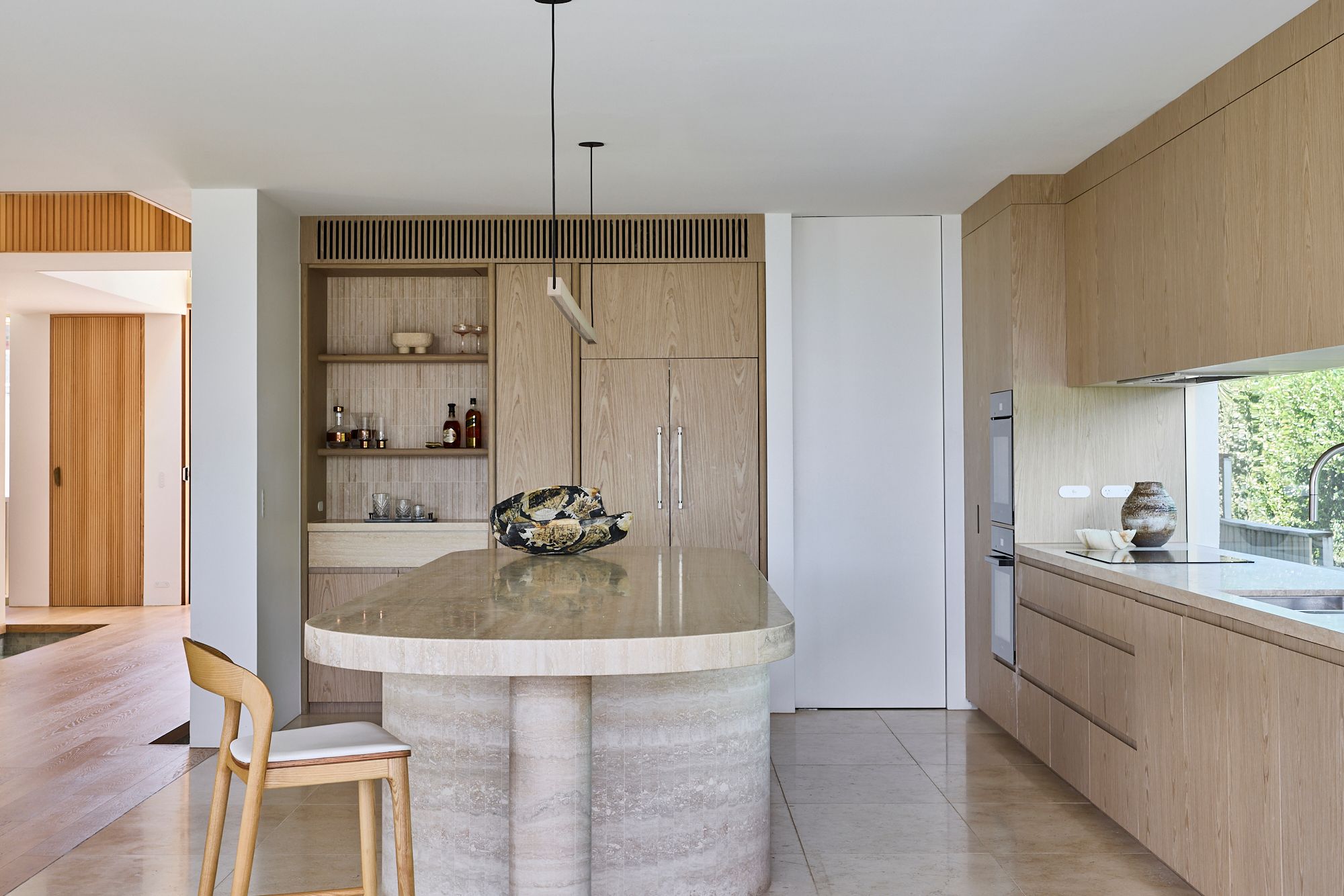
A renovation can quickly become overwhelming when it comes time to select finishes. Stone, tiles, timber, paint colours, cabinetry, flooring, tapware, lighting and hardware all need consideration in relation to one another, so the final palette is balanced and resolved.
An interior designer helps refine these choices so they feel layered, balanced and enduring. This is not about following a fixed formula. It is about understanding the architecture of the home, the client's lifestyle, the natural light, the broader design direction and the level of maintenance required.
A beautiful material palette should feel resolved across the whole home. It should have enough variation to create interest, but enough restraint to feel calm and considered. There is a fine line between creating depth and overwhelming a space, and this is where experience matters. The wrong undertone, scale, finish or texture can change the feeling of a room entirely.
By making these decisions as part of a broader design story rather than treating each selection in isolation, the final result feels more naturally connected and intentional.
Working with Builders and Trades
Many homeowners are surprised by how much coordination happens behind the scenes during a renovation. Interior designers work closely with a wide range of artisans, trades and suppliers, including builders, architects, joiners, electricians, plumbers, stonemasons, tilers, painters, curtain makers, furniture suppliers and other specialists.
Clear communication is essential. Drawings, schedules, specifications and documentation help ensure that the design intent is understood and that the right information is available at the right time.
This is especially important when custom joinery, lighting plans, bathroom details, kitchen design or bespoke furniture are involved. A designer can help resolve details before they become costly site issues, reducing uncertainty for both the client and the construction team.
At Conway + Wise, collaboration is central to our process. We work with clients, artisans and building professionals throughout the design journey to keep the project aligned with the original vision while responding thoughtfully to practical site requirements.
Understanding the Design Process
Every studio works slightly differently, but most interior design projects follow a structured process. This may include an initial consultation, concept design, design development, documentation, sourcing, procurement, construction support and final styling.
In a nutshell, the concept stage establishes the overall direction. This is where the mood, palette, spatial ideas and design story begin to take shape. Design development then refines these ideas into more detailed selections, layouts and specifications. Documentation provides the information required by builders, joiners and trades to price and deliver the work accurately.
This structure is important because it creates momentum and reduces guesswork. It also helps clients understand when decisions need to be made and how each stage informs the next.
A well-managed design process should feel collaborative, but guided. There is room for discussion and refinement, but the project is always moving toward a clear and resolved outcome.
The Final Layer: Decoration and Styling
The difference between a completed renovation and a truly finished home often comes down to the final layer.
Furniture, rugs, curtains, artwork, lighting, mirrors, objects and soft furnishings bring warmth, personality and proportion to a space. These pieces help a home feel lived in and complete, rather than newly built but unfinished.
Professional interior styling is not simply about adding decorative items. It considers scale, texture, colour, comfort, placement and the way each piece contributes to the overall design story. The right sofa, artwork or curtain fabric can soften architecture, connect rooms and create a more inviting atmosphere.
At Conway + Wise, our decoration service can include furniture selection, artwork sourcing, procurement, installation and final styling. This allows the home to be resolved from the larger architectural gestures through to the smallest details.
Avoiding Costly Mistakes
One of the most practical benefits of hiring an interior designer is the ability to make decisions with greater confidence. Renovations can become expensive when selections are rushed or not fit for purpose, documentation is unclear, or design decisions are made too late.
A designer helps identify potential issues early, refine the scope, and ensure the budget is being directed toward the areas that will have the greatest impact.
This does not mean every project needs the most expensive materials or custom solutions. It means making considered choices that suit the home, the client and the long-term outcome.
Good design brings clarity. It helps reduce second-guessing and keeps the renovation moving in a more purposeful direction.
Final Thoughts
Hiring an interior designer isn't about adding complexity to a renovation. It's about creating clarity, avoiding costly mistakes and ensuring every decision contributes to a home that feels personal, functional and beautifully resolved.
A thoughtful design process allows your home to be considered as a whole, bringing structure to the many decisions involved. The result is a home that feels calm, connected and genuinely supportive of the way you live.
Explore our completed projects, including North Sydney, Wanderlust Vaucluse and Bellevue Hill, via our Selected Projects.